






López, originally from Tijuana, and Tweel, from Charlottesville, draw on their experience in independent filmmaking—already proven in works like The King of Kong—to craft an engaging and visually polished narrative.
The film uses no actors: its protagonists are real founders and pioneers such as Bre Pettis of MakerBot, Maxim Lobovsky of Formlabs, and more controversial figures like Cody Wilson, known for the 3D-printed gun. This choice lends the documentary authenticity and immediacy, turning it into a direct historical record of the era.
The film is set during a crucial moment: the years immediately preceding the so-called “bubble” of major 3D-printing companies like 3D Systems and Stratasys.
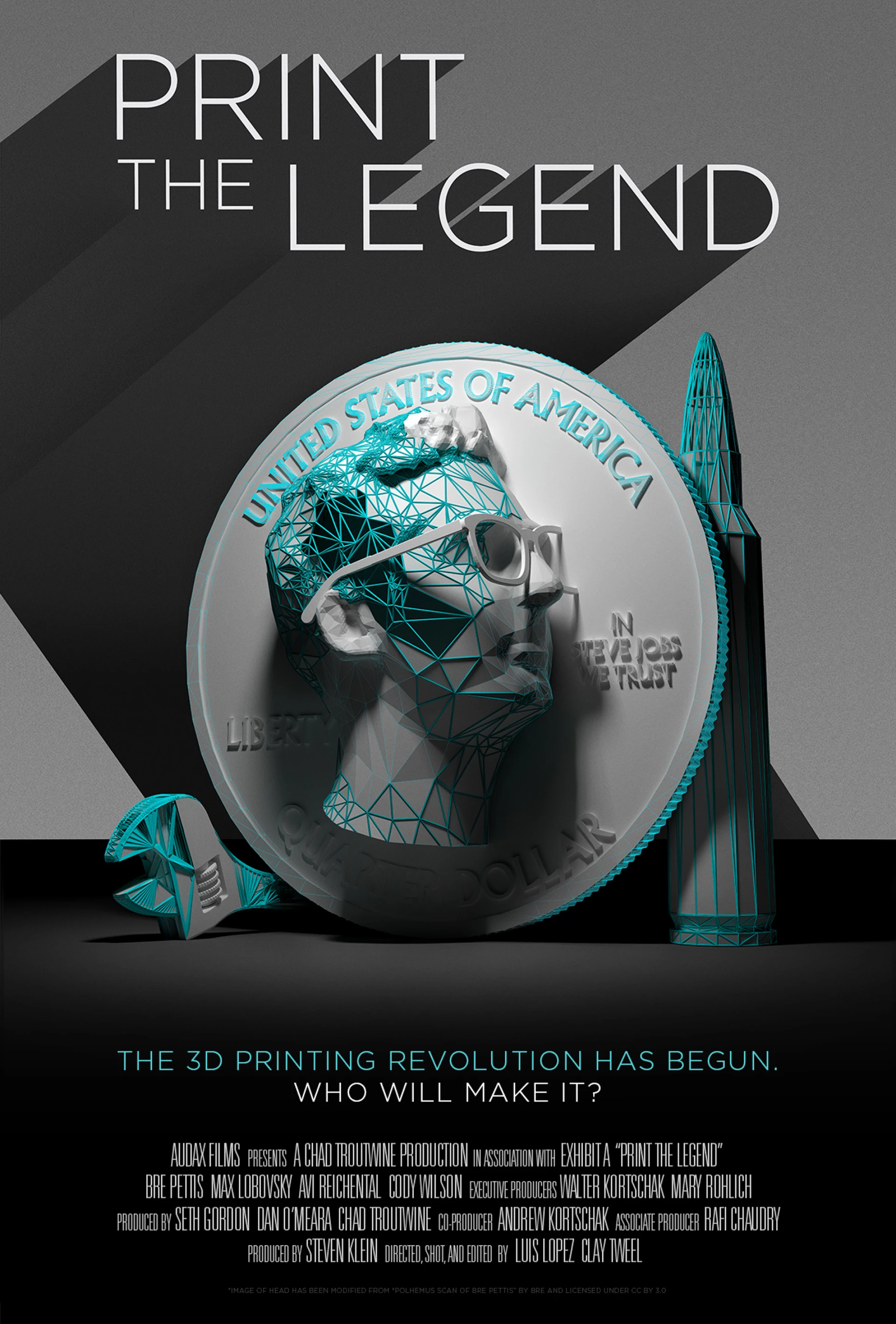
It showcases agile, idealistic startups trying to transform 3D printing from a niche hobby into a mainstream technology. MakerBot, for instance, embodies the “maker” spirit—passion, design, personal storytelling—with a visionary energy reminiscent of figures like Steve Jobs.
The tension between idealism and industrial logic, between creative enthusiasm and the demands of scalability, is one of the documentary’s central threads.
Print the Legend also tackles the ethical implications of the technology: the interviews with Cody Wilson introduce a troubling side to the democratization of manufacturing, showing how 3D printing can be used to create potentially dangerous tools.
The direction is skillful: the rhythm alternates between entrepreneurial euphoria, internal conflict, and moral reflection. By observing startup dynamics—prototypes, frantic meetings, crises—it builds a story that at times feels like a corporate thriller.
In the years following 2014, many of the hopes and visions portrayed in the film failed to materialize for the American protagonists, while other players stepped forward.
MakerBot was acquired by Stratasys and shifted its focus to education, while Formlabs continued to grow in the professional and prosumer sectors. 3D Systems, despite ongoing innovation, experienced fluctuating revenues and slower-than-expected growth.
One limitation of the film is its strongly American point of view, which presents U.S. startups as the epicenter of innovation while overlooking Europe’s vibrant contributions.
At the time the documentary was made, Europe already hosted globally recognized companies and movements. Examples include RepRap, Prusa Research, and Ultimaker, as well as smaller startups like Mcor Technologies (paper printing), WASP (natural-material construction), ZYYX Labs (safe desktop printers), 3D Hubs (printing networks), and Wittystore (soap printing / 3D model marketplace).
These projects highlight a diverse European ecosystem, ranging from open-source initiatives to alternative-material experimentation, from building construction to “artistic” or ecological printing. Print the Legend largely ignores these realities, resulting in a partial account.
The consumer-level 3D-printing revolution unfolded much more slowly—and only in recent years has it accelerated, thanks mainly to Chinese brands such as Creality, Anycubic, Elegoo, and Bambu Lab. These companies copied and refined American and European open-source designs, capturing the entry-level market with affordable, high-performing machines. They succeeded in making 3D printing accessible to millions of consumers, effectively achieving what MakerBot and Formlabs had hoped to accomplish.
Print the Legend remains a key documentary for understanding the roots, ambitions, and ethical dilemmas of 3D printing. The decision to follow real-life protagonists lends it authenticity, while its direction creates a rhythm that is both engaging and contemplative.
It is a valuable—though incomplete—testimony: it captures the American dream of 3D printing during those years, but only one part of the global revolution the technology ultimately sparked.
Author. E. Mulas
----------------------------------------------------

