




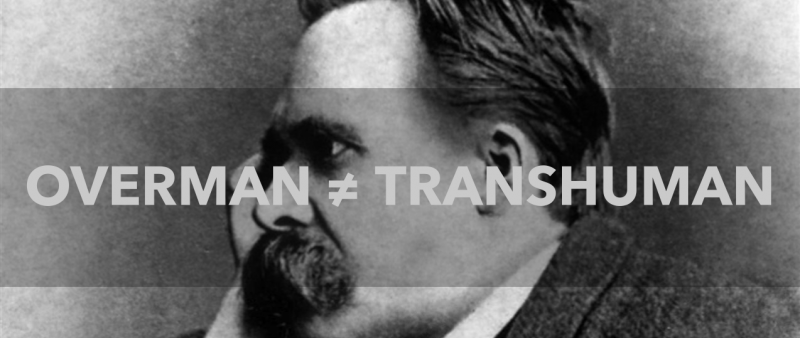


The Overman does not arise from biological or technological enhancement, but from a radical revaluation of values. Nietzsche was not seeking superior “hardware”, but an individual capable of giving meaning to life after the “death of God”, exercising a Will to Power grounded in self-mastery and creativity. His elevation passes through Amor Fati: the acceptance of suffering, finitude and contingency as necessary conditions of self-transcendence.
“Between the Übermensch and artificial intelligence there runs an ontological fracture: to overcome the human does not mean to enhance it mechanically, but to have the courage to confront pain and limitation.”
Transhumanism, by contrast, advances an instrumental rationalism that regards biology as a set of limits to be overcome. Programmed longevity, cognitive enhancement, neural chips and bionic interfaces offer genuine opportunities: reducing disease, expanding cognitive capacity, prolonging life. Where Nietzsche demanded moral and poetic metamorphosis, the prophets of silicon aim at technical optimisation and the management of suffering.
The paradox is clear: technology does not create the Overman; it risks entrenching the Last Man — the being who seeks only comfort, security and aseptic longevity. Rather than confronting the abyss, the transhuman may be reduced to a passive terminal, automating his own mediocrity. And yet, if used with discernment, technology can become an instrument of the will without replacing it.
The true Sapere Aude4 today is not measured in chips, but in the capacity to live each moment fully, accepting the Eternal Recurrence5.
If the transhumanist seeks to “escape” time and death through technology, Nietzsche’s Overman chooses instead to “inhabit” time so deeply that he would will its eternal return.
To overcome the human does not mean enhancing it mechanically; it means having the courage to become who one is, using technology as a means rather than as a shortcut towards an illusory artificial divinity. In the end, what defines the human remains the capacity to confront pain, limitation and the mystery of life.
Author: Emanuele Mulas, MSc MIEI
-----------------------------
Notes:
- Friedrich Nietzsche (1844–1900): German philosopher and philologist, among the most influential thinkers of the nineteenth century. Known for proclaiming the “death of God”, he explored nihilism and the crisis of Western values. Through concepts such as the Übermensch, Amor Fati and the Will to Power, he theorised a creative overcoming of the human grounded in the acceptance of destiny and the revaluation of all established moralities.
- Transhumanism: An intellectual and scientific movement advocating the use of emerging technologies (biotechnology, artificial intelligence, neuroprosthetics) to transcend the biological limits of the human species. It seeks to defeat ageing, enhance cognitive capacities and eliminate involuntary suffering, envisioning a transition from the human to a technologically evolved “post-human”.
- Übermensch (Overman): A central concept in Nietzsche’s philosophy, representing the individual who has overcome traditional morality and the nihilism resulting from the “death of God”. It is not a biologically superior being, but a person capable of creating his own values, affirming the Eternal Recurrence and saying “yes” to life through Amor Fati, transforming suffering into creative power.
- Sapere aude: A Latin phrase meaning “Dare to know” or “Have the courage to know”. Originating with Horace, it became the motto of the Enlightenment through Immanuel Kant, who defined it as the exhortation to emerge from intellectual immaturity by using one’s own reason without the guidance of another.
- Eternal Recurrence: One of Nietzsche’s most vertiginous ideas, according to which every moment of life is destined to recur cyclically and infinitely, exactly as it is. It is not a cosmological theory but a supreme ethical test: only one who loves life so deeply as to will the eternal return of every pain and joy can truly be called an Overman.

